Planning
Six steps to building an ADU in Squamish
Published · Updated
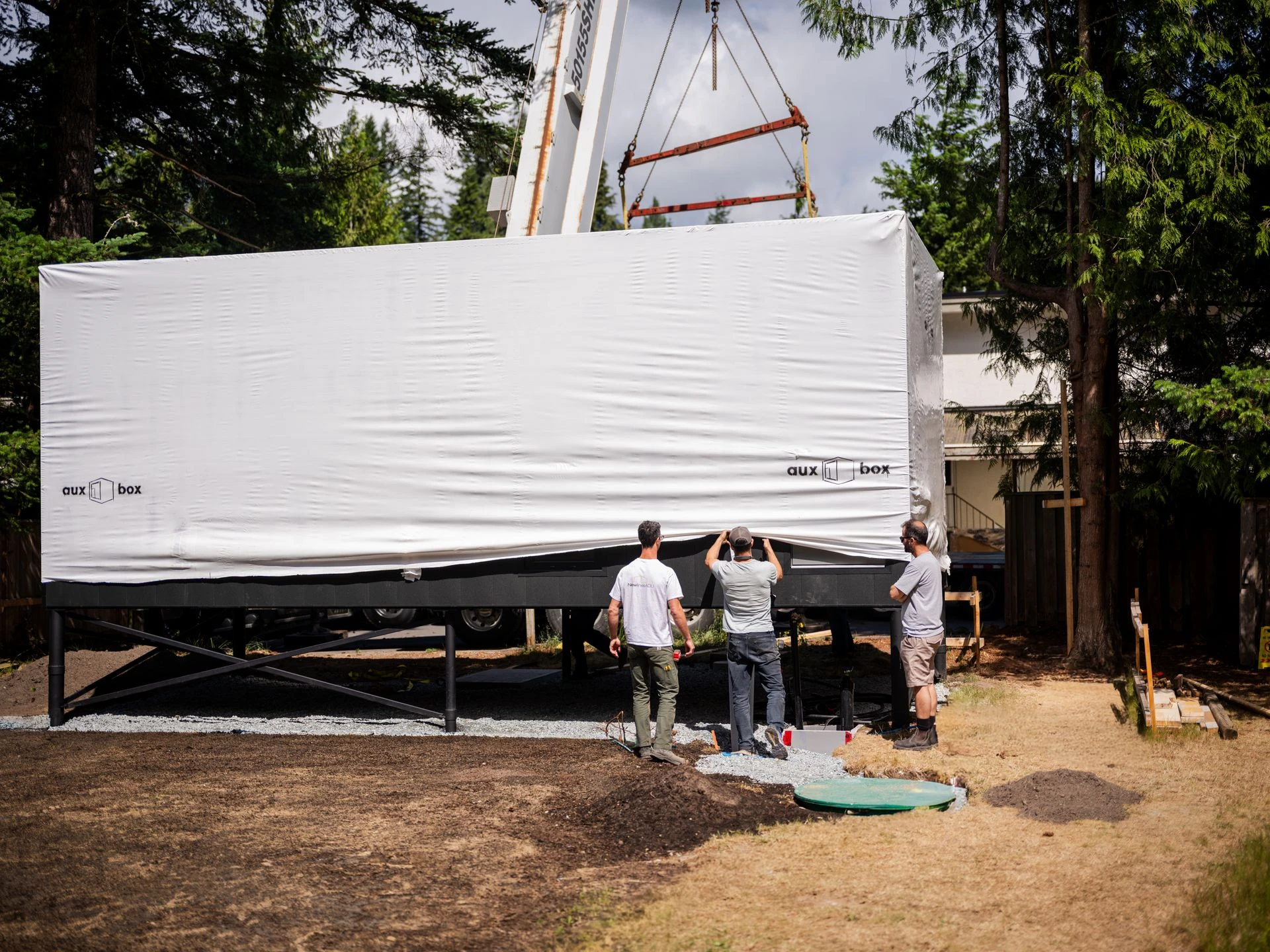
Building an ADU involves several types of work, but the homeowner does not need to organise every trade and consultant alone. Newlines can coordinate the project from the first property review through construction and handover.
You bring the goals and make the decisions about your home. We develop the scope, explain the next choices and manage the work needed to carry them through.
1. Understand the property and your goals
We start with the address, the intended use and any information already available. The early review looks at the likely building fit, local requirements, access, services and site questions that need closer investigation.
Start with your address and project idea. Share any survey, plans or previous reports you already have; a site visit or further investigation can follow where needed.
2. Choose a design direction and planning scope
We compare suitable approaches around your priorities and the lot. That may involve a modular model, a panelized design, a pre-reviewed plan or custom construction.
Pre-construction planning brings the siting direction, required investigations, planning budget and approval path together. We identify what is known and what needs confirmation before the construction scope can be settled.
3. Coordinate drawings, consultants and applications
We arrange and coordinate the relevant design and professional work for the agreed scope. Depending on the property, that can include survey, structural, geotechnical, civil and energy input alongside the building drawings.
We manage the application process and responses with the project team. Approval requirements and review time depend on the actual application and authorities; the programme should reflect those dependencies.
4. Prepare for procurement and site work
Once the relevant design and approval conditions are resolved, we coordinate procurement, construction planning and the work needed to prepare the site. The budget and contract scope should clearly show the inclusions, exclusions and any remaining allowances.
For a prefabricated home, the manufacturer's information and production programme need to align with the foundation, service locations and delivery plan. Where appropriate, manufacturing can overlap with approved work on the property.
5. Build, deliver or assemble the home
We coordinate site work, foundations, services, delivery and the construction trades. A modular installation or panel assembly is one milestone within that work, followed by the remaining connections, finishes and inspections.
We keep the homeowner informed about progress and decisions. Changes are easier to manage when their scope, cost and schedule effect are understood before the work proceeds.
6. Complete inspections and handover
The final stage brings together outstanding work, required final approvals, a walkthrough and the information needed to operate and maintain the home. We work through the completion items with you and the project team.
The aim is a finished home and a clear handover, with the project records and responsibilities understood. Occupancy follows the applicable approvals rather than the delivery date alone.
If you want to begin, send the address and a short description of your idea. We can help work out which of these steps is useful next for your property.